
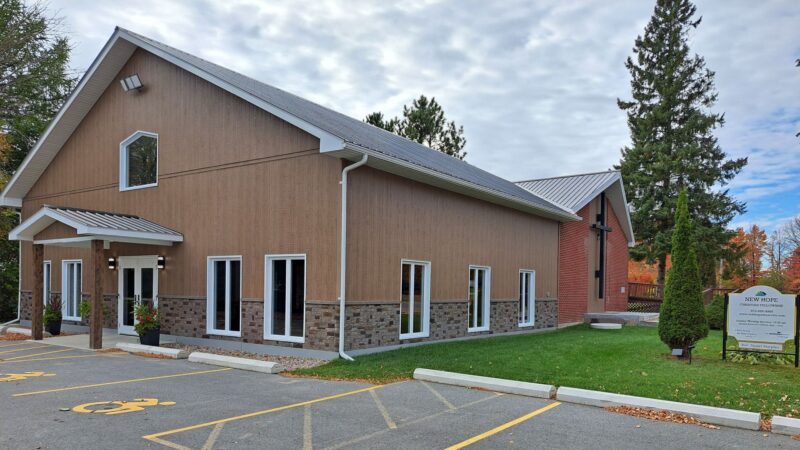
“Whose building will we use? What name will we carry forward? Who will be the pastor? What laity will lead? What programs will survive?” Church mergers surface all kinds of questions about what it means to be the church: and how to carry on the history of a congregation that no longer exists in the same way.
Often, merger stories carry undertones of loss for congregations that once stood alone. But New Hope Christian Fellowship in Shawville, Quebec, offers a different picture: a partnership born of a shared desire to serve the community.
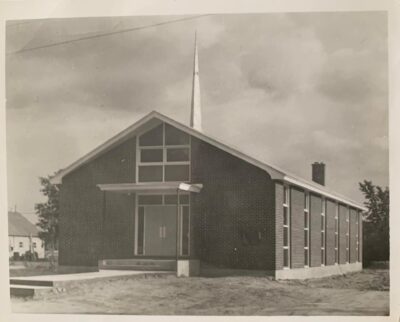 Shawville Wesleyan Methodist Church began in the early 1900s, planted in the countryside before being moved by horses and rollers into town in the 20s. Around the same time, the Standard Church of America established a congregation nearby. Both churches shared revivalist, holiness DNA, but for decades they coexisted more than they collaborated.
“There was a willingness to cooperate,” recalled Reverend Stuart Marples, who pastored the Wesleyan church from 1982–1995, before returning to Shawville in 2019. “Revival services and things like that were shared. But there was also an underlying competitiveness, so when merger was discussed, it never really went anywhere, partly because nobody could answer the question, ‘whose building will we keep?’”
Eventually, the Wesleyan congregation faced declining attendance. Instead of clinging to their building, they prayerfully chose to sell it and join their theological cousins at what had become New Hope Christian Fellowship.
When Rev. Marples returned in 2019 to pastor New Hope after years of ministry elsewhere, one of his first questions was whether an “us and them” mentality lingered after the merger. The answer he received from the committee was a resounding “no.”
“If that’s the case, that’s a miracle,” he said. And when he arrived, he saw it was true. New Hope attenders often remark about their gratitude that both congregations’ histories are honored, whether in small touches like a foyer mirror crafted from a window of the former Wesleyan building, or in the spirit of togetherness that defines the church. What could have been a story of takeover became a testimony of shared identity and mission.
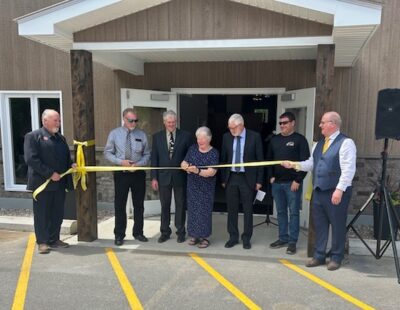 That mission took on new urgency when COVID-19 hit. While other local churches closed, New Hope livestreamed services, moved worship outdoors and staged drive-in Christmas dramas that drew hundreds. “We realized if the church stays insular, it will die,” Rev. Marples reflected. “We’ve got to get church out of the building.”
When the congregation later embarked on a building project, they established three guiding principles: make the space fully accessible, remain debt-free and give 10 percent of the project’s cost to global missions. The result was a fully accessible addition with ramps, washrooms, classrooms and fellowship space, paid off in full, alongside a commitment to missions projects in Nicaragua, Ghana and Egypt.
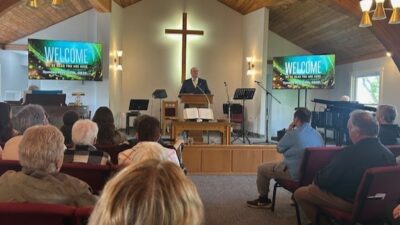 Today, New Hope averages between 60 and 70 in attendance and continues to find ways to serve their neighbors: hosting preschool playgroups, offering indoor walking space for seniors in the winter, and preparing to act as a community hub in times of natural disaster. Online discipleship courses birthed during the pandemic have already led to baptisms, new members and even a wedding.
As Rev. Marples prepares to retire, he feels grateful not only for programs or facilities, but for the church’s spiritual climate. “There was no sense of takeover, no sense of swallowing up, no sense of ‘you failed, so we had to take you in.’ These people from both congregations have come together as one church. It is miraculous.”
For churches weighing difficult decisions about sustainability, Shawville New Hope offers a hopeful witness. By honoring the past without clinging to it, choosing unity over control, and treating merger not as loss but as Spirit-given opportunity, Rev. Marples shares this as a possible roadmap for churches who embrace faith for the future. In Shawville, the Spirit’s answer to all those anxious questions (whose building, whose name, whose future) is simply this: “All of ours! We’re building one church for the community.”
Rev. Ethan Linder is the pastor of discipleship at College Wesleyan Church in Marion, Indiana, and contributing editor at The Wesleyan Church’s Education and Clergy Development Division.
