
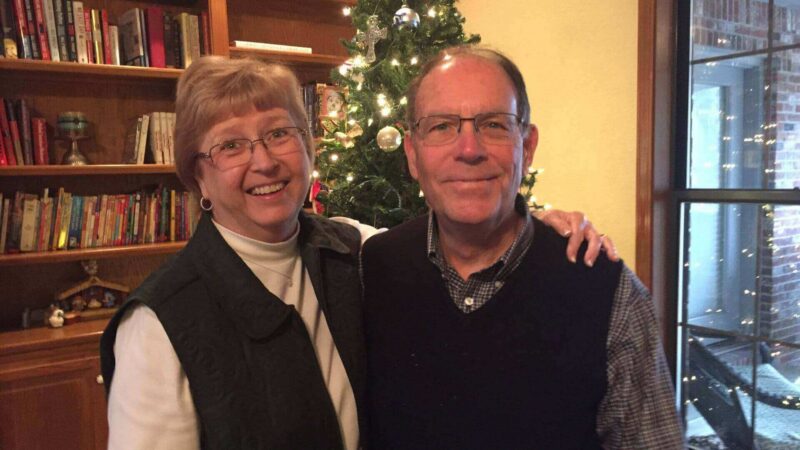
When doctors told Reverend Max Colaw that he had esophageal cancer, he knew he was at the beginning of a long treatment process; but he didn’t yet understand how that diagnosis would shape the ministry God would give him in the years that followed.
In the fall of 2024, persistent acid reflux led Max to undergo further testing and a scope revealed a tumor at the base of his esophagus. The physician told him it appeared malignant. Follow-up testing confirmed it was cancer. Doctors explained the seriousness of esophageal cancer and the kind of treatment it often requires, including the possibility of major surgery involving the esophagus, stomach and surrounding lymph nodes. Max and his wife, Ruth Ann, went home and prayed.
As they prayed, both gravitated toward Romans 8:28: “And we know that in all things God works for the good of those who love him, who have been called according to his purpose.” The Colaws sensed a steady assurance that God would work through whatever lay ahead. “We know that verse doesn’t guarantee everything will be good right now, or that everything will be easy, but that God would work through even hard things to accomplish his purposes.” That understanding of the Scripture motivated the Colaw family to reframe their prayers: asking the Lord not only for healing, but that he would use the situation for his purposes.
Treatment began in May 2025 with radiation and chemotherapy. At each appointment, Max thanked the medical personnel for their training and skill and then told them he believed God was the final healer whether through them or miraculously.
Those conversations often went further than he expected. One radiologist told Max that he had entered medicine as an atheist. Over time, he said he had come to believe there is a God and later added that he had come to believe in Jesus as well.
Another physician, after riding in the elevator with Max and hearing him describe his experience with cancer, and his way of undergoing suffering with God’s accompaniment, stopped and said quietly, “You’ve just helped me. That gives me some hope to give other people.”
Max realized that the places he went to for treatment were also places where he could encourage others. He spoke openly with nurses, doctors and patients, and he prayed with people when the opportunity arose.
After finishing treatment in July 2025, doctors waited until September to repeat scans so everything could settle. When the gastroenterologist returned with results, he told Max the tumor was gone. Max began to cry and the nurse (who’d grown close to the Colaws during their treatment) began to cry. She stepped out of the room because she said she could not contain her emotions.
Further imaging showed no evidence of disease anywhere in his body. His oncologist explained the medical phrase NED (no evidence of disease).
That conclusion to treatment brought gratitude and a sense of gravity, because he knows not everyone receives the same outcome. After his treatment, he was asked to visit another man diagnosed with esophageal cancer. Max went to his home where they talked and prayed together. That man later died. Max remembers visiting the family afterward and the man’s wife embracing him and expressing appreciation for the conversations they had shared.
“I’m left sometimes with a question of ‘why me?’ and I still don’t know,” he reflected. “But I do know that God keeps giving me opportunities to walk with people who are facing fear or a diagnosis like I had.”
At a ministerial retreat, after Max shared briefly about his experience, a young woman approached him and asked if they could talk. Doctors believed she might have cancer and she was waiting for results. Max and his wife, Ruth Ann, listened to her, prayed with her and kept in touch afterward. Encounters like that continue to happen. People who are hurting ask him to sit with them, pray with them or simply listen.
The Colaw’s ministry of presence was shaped over decades. Max served 21 years as a local Wesleyan church pastor and 29 years as a district superintendent.
He still remembers his first church assignment at 19. He arrived to find the doors locked and almost no congregation. One parishioner told him (after service) that he did not need to come back. Max returned anyway; and that instinct remains with him. He continues to show up for people.
His routine these days will include ongoing tests and monitoring, and Max speaks about the future with hope and purpose. He describes his desire simply: “I’m going to use every one of my days to hopefully be a help and an encouragement to somebody else.”
Max’s story includes a diagnosis, months of treatment and the words “no evidence of disease,” and also includes doctors who paused to talk about faith, nurses who shared tears and patients who needed someone beside them.
He entered cancer treatment as a patient and saw even his diagnosis as a pastor: walking with others through their own pain, loss and grief, and listening with God for ways to be a blessing.
For more stories of holiness coming alive in everyday joy and suffering, visit wesleyan.org/news.
Rev. Ethan Linder is the pastor of discipleship at College Wesleyan Church in Marion, Indiana.
Holy Bible, New International Version®, NIV® Copyright ©1973, 1978, 1984, 2011 by Biblica, Inc.® Used by permission. All rights reserved worldwide.
