
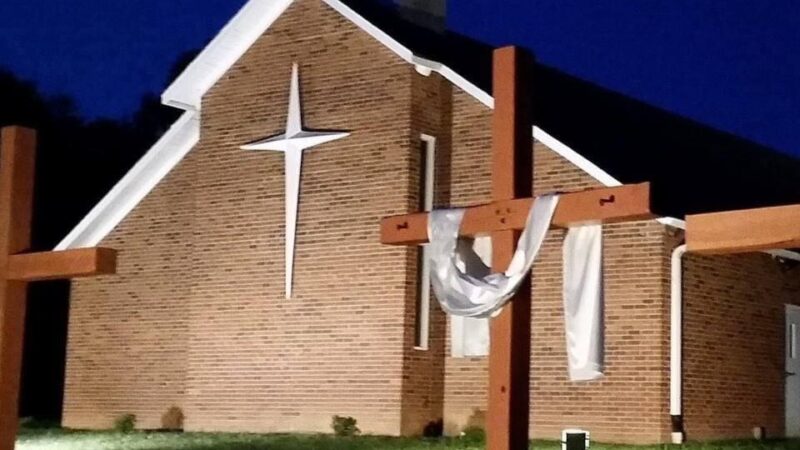
When Hurricane Helene devastated western North Carolina in 2024, Wesleyan churches across the North Carolina (NC) West and East districts became lifelines for those western communities: providing supplies, support and connections. At Bethel Wesleyan Church in Flat Rock, the relief effort has sharpened a conviction they’d already been living out: the belief that churches should be pointed outward toward their neighbors.
At the height of the crisis, Bethel Wesleyan’s campus looked less like a small-town church and more like a bustling distribution center. “You’d walk out of the church one day and see eight Amazon trucks in the front and eight in the back,” Pastor Tim Clark recalled. “At one point, we were receiving 2,000 packages a day. Everything that came in went right back out.”
The church became a hub for hundreds of donors across the country, who used Amazon and other services to funnel supplies into the hardest-hit areas. While FEMA assistance was delayed, local churches and nonprofits stepped into the gap. Today, Bethel continues to provide propane for families living in campers, supplies for home repairs, and even backpacks of food for children in nearby schools. “We tell people all the time: this is a marathon, not a sprint,” Pastor Tim said. “As long as we have the resources, we’ll keep helping as many as we can.”
The relief work has been intergenerationally mobilized. Children in the congregation wrapped donated toys to give to classmates who had lost their homes. Senior adults volunteered daily to sort supplies and distribute heaters during freezing winter months. “If it hadn’t been for our seniors, I don’t know what we would have done,” Pastor Tim said. “God gave us strength we didn’t have on our own.”
The congregation has metabolized this type of service as a core function of their congregational life. “The thing that’s blessed my heart the most is that now things have calmed down, people are asking, ‘What do we do next?’” Pastor Tim shared. That question has fueled new drives for coats, shoes and other essentials in the community.
While Bethel became a hub of immediate relief, Old Fort Wesleyan has been focused on rebuilding. Their church facility, heavily damaged by the storm, is now nearly restored. A dedication service occurred October 12, marking a new chapter of ministry after a long season of disruption.
District leaders highlight how both Bethel and Old Fort embody what it looks like for Wesleyans to serve on the frontlines. These congregations have become centers of hope, not only meeting physical needs but also encouraging people with the hope of Jesus.
As he thinks about how other churches can send every generation to serve their neighbors, Pastor Tim is quick to point out that what sustained Bethel during the crisis wasn’t a sudden burst of activity, but years of steady, outward-focused ministry. The church had already been running backpack food programs and partnering with local schools. “When this came about, it was just second nature,” he said. “We’d been helping people for years. We just scaled it up.”
That outward posture changed how his congregation saw themselves. “It connected God’s people in ways I never would have imagined. We realized people an hour away are still our neighbors. And it showed us that anyone (no matter their resources) can serve with their gifts and their time, if they’re just willing.”
In Burnsville, Bakersville and other mountain towns, debris cleanup still continues. Families remain in temporary housing. Yet through it all, Wesleyan churches in NC West and East are committed to staying present. “This is what the church is supposed to be,” Pastor Tim said simply, “the hands and feet of Jesus.”
For more stories of congregations serving as the hands and feet of Jesus, visit wesleyan.org/news.
Rev. Ethan Linder is the pastor of discipleship at College Wesleyan Church in Marion, Indiana, and contributing editor at The Wesleyan Church’s Education and Clergy Development Division.
