
Every major movement of God begins with an ordinary act of faith. Yet on any given Sunday, it can be easy to overlook the crisis unfolding in our own communities: children navigating severe trauma, families facing extreme poverty and young people searching desperately for a safe place to belong.
The scale of these needs can feel overwhelming. Yet Scripture reminds us that genuine, life-changing faith always starts with small acts in our local neighborhoods. “Pure religion” is not measured by the height of our steeples or the size of our Sunday services; it is revealed in how actively we care for the most vulnerable among us.
As Wesleyans, we are part of a rich, living history that champions holiness in action. Through the Hephzibah62:4 movement, our denomination stands uniquely equipped to bridge the gap between abstract theological truth and hands-on compassion. God has declared that his people are no longer “deserted” or “desolate,” but Hephzibah, his deep delight. The invitation is before each of us today: Will we sit passively on the sidelines, or will we answer the call to transform the lives of vulnerable children in our own zip code?
More than 126 years ago, a woman named Bettie Tyler demonstrated exactly what that kind of faith-filled response can accomplish. Inspired by God’s call to care for children in need, she began what would become Hephzibah Children’s Home, a ministry whose name comes from Isaiah 62:4, where God declares, “You shall be called Hephzibah … for the Lord delights in you.” Bettie did not begin with abundant resources, a strategic plan or financial security. She began with four children, a small amount of food, very little money and a willingness to trust God with what seemed insufficient.
By worldly standards, it was not enough. Yet God multiplied her simple act of obedience into a ministry that has impacted countless children and families for generations. Bettie’s story, rooted in Wesleyan history, serves as a powerful reminder that God is not limited by our resources, our capacity or our circumstances. He simply asks for our faithfulness.
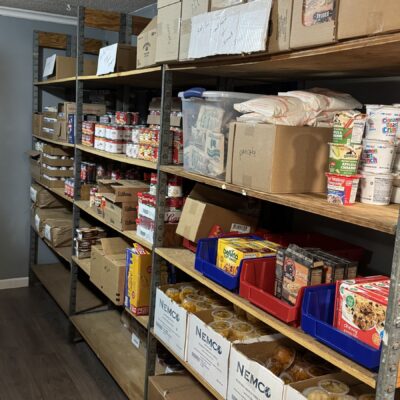 That same spirit of faithfulness can be seen at Hydrant Church in Goldsboro, North Carolina, where a food pantry began in a closet with a handful of teenagers who simply wanted to make a difference. More than a decade later, that small act of obedience has grown into a ministry reaching vulnerable families throughout the community. With 90% of the congregation actively serving, Hydrant is demonstrating that the church isn’t defined by its size or resources, but by its willingness to respond to the needs around it.
Hydrant has responded to food insecurity in its community, where approximately one in five children are affected. Through partnerships with the local Dollar General, Panera and other businesses, the church stocks and opens its food pantry once a month for anyone in need and every week for child protective and social services. Each month, the pantry provides meals for more than 150 families, including over 200 vulnerable children. God has abundantly blessed the ministry with enough groceries to provide 25 bookbags each week — a total of 100 each month — to local high school students from vulnerable populations.
This October, the church is taking another step of obedience by launching a grocery-store-style food pantry where volunteers of all ages can serve their neighbors while offering something just as important as food: dignity. Their vision doesn’t stop there. Plans are already underway for The Table, a pay-as-you-can restaurant where everyone will be welcome regardless of their financial status.
For Lead Pastor Reverend Liz Baker, that work flows from one conviction: the church should be a hospital, not a museum.
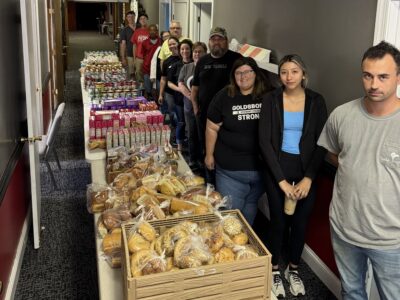 “A hospital is a place for people who have nowhere else to turn,” Pastor Liz explains. “People who find themselves without family, without love, or without food. We want Hydrant to be a place where people know they are seen, valued, and loved … we simply want to welcome them home.”
Pastor Liz gives God all the glory for providing what the church needs to serve its community every day. Reflecting on that growth, she says, “We went from a closet to now serving a hot breakfast, sitting and eating with people and then letting them shop in their very own free grocery store — with fresh produce, bread, meat and so much more — only because of the abundant faithfulness and provision of God!”
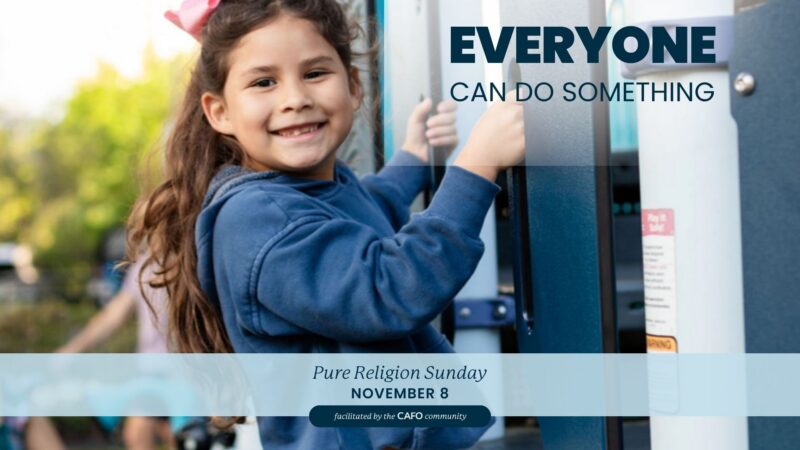
This November, your church can join the movement through Pure Religion Sunday. Rooted in James 1:27, the observance carries forward the historic legacy of Orphan Sunday and Stand Sunday by uniting local churches to serve, support, foster, mentor, advocate for and walk alongside families in need.
As Wesleyan churches around the globe participate on or near the second Sunday in November, they join a larger story — one that shows how ordinary, daily acts of faith can create an extraordinary ripple of hope beyond our church walls. Hephzibah’s story reminds us that when God’s people move in obedience, communities change.
The question before your congregation is the same one Bettie Tyler answered more than a century ago: What might God do if we offer him what we have and trust him with the rest?
Ready to participate in Pure Religion Sunday? Access free planning resources and discover ways your church can engage your congregation in caring for vulnerable children and families this November.
Sheri Jennings is a Wesleyan pastor and program coordinator for Hephzibah62:4.
