
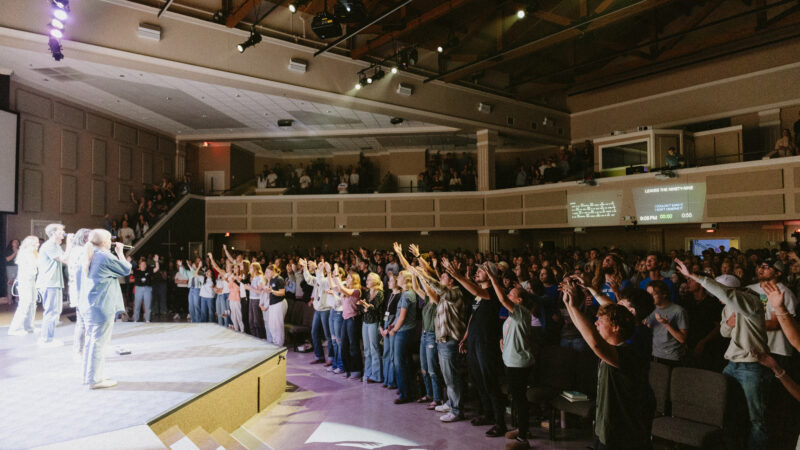
On Sunday nights in Brookings, South Dakota, around 800 young adults pack the sanctuary at GracePoint Church for Oasis, the church’s college and young adult ministry. GracePoint has had a consistent college and young adult ministry for a couple decades, with a huge surge of involvement taking place in 2023 and growing year over year.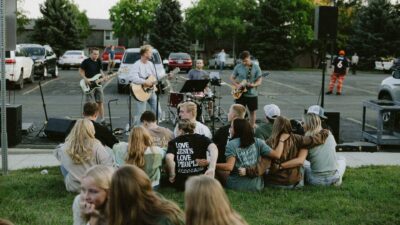
The roots of this growth run deep; this ministry started in 2005, when GracePoint was still known as Brookings Wesleyan Church, and one of the pastors started a college gathering in his family’s backyard with around 15 college students from South Dakota State University (SDSU).
“But even before that, GracePoint has always had a heart for college students and young adults,” said Reverend Brennen Schmitt, GracePoint’s College and Young Adult pastor. “What we’re seeing now is the fruit of a local church who has given time, attention and resources to young people for 25 years.”
That investment is evident in nearly everything GracePoint does: in intergenerational worship services, Sunday Oasis gatherings and rhythms of everyday discipleship that animate their culture during the week.
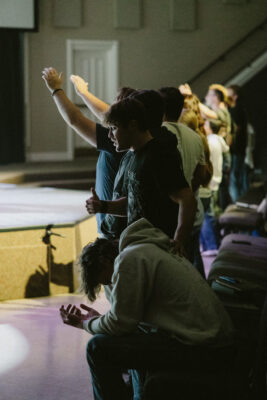 More than 32 of GracePoint’s small groups are young adult groups, which involve about 400 students each semester, with 70 of those students leading the groups. The entire ministry depends on volunteers (from college students and young adults who lead their peers, to older adults who believe college ministry is important).
Oasis has around 25 volunteers on a leadership team (these are young adults who maintain a core investment in the direction of the ministry), with another 100 people serving on a ministry team, facilitating events and gatherings, and supporting those who call GracePoint “home.”
GracePoint’s culture of support really is a tremendous part of the ministry’s effectiveness. Young adulthood can be lonely; finding nourishing connections during college and beyond can be a frequent pain point. Oasis offers students a place to build belonging with people who are asking similar questions (of God, themselves, and the world around them).
“Community is a really big on-ramp,” said Reverend Emily Kaufman, Groups pastor. “At SDSU, if your community doesn’t think Christ matters, then you probably won’t either. Groups give students a place to belong, and that’s where transformation happens.”
The diversity of those who attend adds to the richness. Many grew up in church, some have drifted and others are exploring faith for the first time. “We probably have 50 to 70 percent who come in as Christians, and then 20 to 30 percent who are seekers,” Rev. Schmitt explained. “Every single week we see new faces, almost always invited by friends. At this point, it’s hard to walk across SDSU’s campus and not meet someone who’s heard of Oasis.”
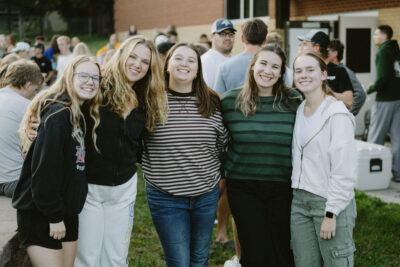 Discipleship runs deeper than large gatherings. Oasis uses John Wesley’s model of discipleship (corporate, communal, personal and private) offering worship services, small groups, and what they call “life groups” focused on prayer and confession. “If you’re in those spaces, over time you’re going to become more like Jesus,” Rev. Schmitt said. Much of this work is carried forward by students themselves. “If you walk into any coffee shop in Brookings, you’ll probably see Oasis young adults meeting, encouraging one another, praying or reading Scripture together.”
The transient nature of college ministry (every three to four years the entire college population turns over) has become part of GracePoint’s vision. “For most people, Brookings is a stop, not a stay,” Rev. Schmitt shared. “But while they’re here, we disciple them the best we can. Then we send them out.”
The impact is also felt locally. “College students may not have the financial resources, but what they bring in energy and time is incredible,” said Reverend Jaena Gormong, Student Worship pastor. “They volunteer in kids’ ministry, youth groups, care ministry … Their passion leaks into everything.” Each August, when students return, the whole church feels the difference. “It’s like fireworks and confetti,” Rev. Schmitt laughed. “Everyone’s stoked to see the students walk back through the doors.”
GracePoint’s leaders are committed to college and young adult ministry, because, while the “return on investment” isn’t immediate, the way GracePoint forms students during their college season can age with them into a fruitful adulthood. “You might only have a student for four years,” Rev. Kaufman said, “but how you love, equip, and send them can have an eternal impact. That specific local church may not get to harvest the fruit, but the kingdom will.”
“I could tell you about a missionary in Zambia, a guy serving in the military in Germany who’s one of his church’s key volunteers because his experience here shaped him … I could tell you about someone else in Portland, another in Colorado, and others on the East Coast, who are serving incredibly faithfully, because GracePoint is open-handed, saying, ‘We’ll send you; but while we have you, we’ll train you the best we can,’” reflected Rev. Schmitt. “I would love it if one of our volunteers graduates and comes to your church, and you say, ‘This person is the greatest blessing we’ve ever received,’ and you ask them how they got this way, and they say, ‘I was part of this college ministry called Oasis that changed my life.’”
As they think about their “sending” ministry, the GracePoint team realizes the uniqueness of their situation: they’re in a college town that hosts a huge state university. But they also believe that young adult ministry can have simple beginnings.
If a church wants to step toward greater care for young adults, “I think you just start with care and connection,” reflected Rev. Kaufman. “I think in a couple of the other contexts I’ve been in, there hasn’t been a huge desire to invest in college students and young adults, because you’re probably only going to have them for four years … I think what’s been really cool with the story of what GracePoint has done is that it’s been a legacy that for over 20 years, people have consistently seen that these people matter, that how they’re trained, how they’re equipped, how they’re cared for, can have eternal impact on the kingdom. And so yes, you might only have a student in your congregation for four years, but there’s an understanding that when they’re being sent out, like how we send them out, matters, because that’s going to lead to a lifetime of ministry, and we get to be part of that journey.”
For more stories of how local churches are equipping and sending every generation of the church, visit wesleyan.org/news.
Rev. Ethan Linder is the pastor of discipleship at College Wesleyan Church in Marion, Indiana, and contributing editor at The Wesleyan Church’s Education and Clergy Development Division.
